Monday, March 31, 2014

Hustle (March 2014)


Do your employees hustle . . . and do you give them a reason to? The other day a young man came walking up my driveway with a leaf rake. Usually I rake the leaves myself – I actually enjoy it; but I was busy and getting ready for vacation so I met him at the door before he even knocked. He gave me a price range (I agreed to the high end of the range – after all, this was a young guy on spring break trying to make a few extra bucks – so why not be generous).  I went back to my office and worked.  

 Forty-five minutes later, he knocked on the door. I was amazed how quickly he had finished  . . . and at how thoroughly he had done the job.  He proudly announced he was the “fastest leaf raker around” and told me he had been doing it since he was seven years old. This guy had just made about $50 per hour raking leaves . . .  and I was glad to pay it. Before he left, he said can’t make any money raking leaves by the hour!

Many mornings I am among the first to arrive at my local coffee and bagel shop. Sometimes, I’ll see the people who service the restaurants pull up and make their morning delivery.  They are always hustling -- moving as fast as they can. These people get paid by the amount of product they deliver with a customer service component included in their compensation package.  They are not hourly employees.  In some ways, they are in business for themselves because what they earn is based upon their own productivity. 

Many years ago when I was about 13 years old, I used to help a neighbor deliver milk. He owned the route. He hustled and hired me so he could get done faster. 

By now, I’m sure you see the common thread. So ask yourself, do you give your employees a reason to hustle?  Are there incentives in place for those who perform better than average? Are top performers recognized, can they get promoted, do they make more money if they perform at their best?

Providing proper incentives and motivations for employees is an important role of the executive team. I am called upon multiple times every year to work with various executive teams on designing employee incentive plans.  Every CFO should take an active role in this process.  

Below is a fable that I heard years ago . . . the exact source is somewhat unclear but I have always liked the message. 

Every morning in Africa, a gazelle wakes up. It knows it must run faster than the fastest lion or it will be killed. Every morning a lion wakes up. It knows it must outrun the slowest gazelle or it will starve to death. It doesn’t matter whether you are a lion or a gazelle: when the sun comes up, you’d better be running.

When the sun comes up, are you and your employees running?

If your business could benefit from fractional CFO services, I would welcome the chance to speak with you.  Please give me a call at (314) 863-6637 or send an email to   For more information, visit www.homza.com 

your cash is flowing.  know where.®    
Ken Homza   
Copyright @ 2014 Homza Consulting, Inc
.

Thursday, February 27, 2014

Pay More Taxes (February 2014)


There, I said it, pay more taxes.  While most people react negatively to paying more taxes, I actually think it ought to be everyone’s goal!   As tax deadlines approach (March 17 this year for corporate returns and April 15 for individuals, partnerships, and trusts) few are facing those days with the thought of delight about paying more taxes. 

This newsletter is not about tax policy or the politics in Washington, DC.  Aside from voting, contributing to the candidate of one’s choice, being politically active, or running for office, all that any of us can do is operate within the rules that exist at any particular point in time. Rather, this newsletter is about recognizing that there is a broader scope to the finance function other than the preparation of tax returns.  I have seen some business owners put so little emphasis on the finance function that I believe they wouldn’t even have an accounting system but for the need to file tax returns.

Businesses that utilize no financial resources other than a CPA who specializes in tax preparation are short changing themselves.  If the CPA has the desire and abilities to provide a broader scope of services, business owners who don’t extend the engagement beyond the narrow scope of tax planning and preparation are missing the bigger picture.  Clearly, proper preparation of tax filings and related long term tax planning is an important function.   Of course, minimize your tax liability for a given level of income.   But if you only engage a financial partner for tax work, either by their choosing or yours, then you are missing a substantial portion of value that the finance function can and should be adding to your organization.  

I have actually seen business owners react favorably to the statement, “Good news, you don’t owe any taxes; you lost money last year.”  The goal of a business isn’t to avoid paying taxes; the goal of a business is to maximize profitability and cash flow.  Businesses without a sustained level of profitability lack the capital accumulation that is necessary for growth and to survive economic downturns.  They are disadvantaging themselves when it comes time to exit because they are more likely to end up selling under distress conditions, have smaller top-line, and lower EBITDA, compared to businesses that had a broader financial strategy in place.

Broadly speaking the finance function is about providing an understanding of how sales, operations, manufacturing, R&D, administrative areas, etc. relate to each other and contribute to the profitability of the enterprise.  A good finance function helps you understand the competitive landscape and make decisions about how to maximize your potential.   It provides decision support, valuable insights, and contributes to the long term strategic direction of the firm in order to enhance shareholder value. 

So, go ahead.   Make more money . . . pay more taxes . . . isn’t that better than the alternative?

If your business could benefit from fractional CFO services, I would welcome the chance to speak with you.  Please give me a call at (314) 863-6637 or send an email to   For more information, visit www.homza.com 


your cash is flowing.  know where.®    
Ken Homza   
Copyright @ 2014 Homza Consulting, Inc.

Friday, January 31, 2014

Are You Using The Right Tools? (January 2014)

Like many others, I worked construction jobs during my high-school and college days.  I remember one particular job remodeling a bar when the boss asked me to knock a hole in a solid concrete wall for an electrical outlet.  He handed me a hammer and chisel (and a small hammer at that).   I’d been doing this kind of work long enough to know those weren’t the best tools for the job and had worked around the boss long enough to know it was no use arguing with him about it.  Fortunately, another contractor I also worked for arrived as I was starting to work.  I asked him if I could borrow his electric demolition hammer and a few minutes later the job was done. The boss had a surprised look on his face when I asked:  “What’s next?”

Obviously, I no longer work construction, but the underlying lesson remains valuable to this day.    Are you using the right tools for the job?   I can’t count the number of times that I have started to work with clients and find that their financial reporting is lacking, they have multiple unanswered questions about their business, and people are busy compiling data but have very little useful information.   At the same time, I find they are versions behind important software upgrades, are using outdated versions of Excel, and their computers are painfully slow (one recently suggested I use a laptop at their office which is the same model as one I retired years ago . . . no, thanks).   Equally frustrating, people don’t know how to use the tools that they do have (they haven’t been to a training course to enhance their skills in years).  

People cannot be at their most productive if they don’t’ have the right tools and aren’t properly trained.  A true craftsman would never set out to work without making sure his saw was sharp and he had the right hammer for the job.  Why should professionals in your office attempt to do their job with anything less?   You might as well ask them to perform with one hand tied behind their back while hopping on one leg.

I once experienced this exact situation with a new client that was two major releases behind in software upgrades to their ERP (Enterprise Resource Planning) system.  There were upgrades available at no cost except for the time and energy it takes to put them in place.  They literally had the tools at their disposal but were choosing not to use them.  We moved ahead with the first major release upgrade (a necessary step) and plan to follow with the second shortly thereafter.   

Whatever job you are doing, ask yourself if you are using the right tools for the job?  Consider whether you have upgraded your software releases lately and take the time and energy to explore what new capabilities are available to you.  Think about how some simple software changes or upgrades can improve work flow changes to streamline processes and produce a better result at the same time.   

In addition to having the right tools, make sure your people know how to use them.   Too often, companies avoid spending on a $1,000 training course and then spend $10,000 paying that same employee to get the job done in an inefficient manner over the next twelve months.    

Finally, eliminate any “that’s the way we’ve always done it” attitudes from your company.   Continually search for new and better ways to do things and challenge whether or not current processes are the best approach (particularly in light of new and ever changing software tools).    

If your business could benefit from fractional CFO services, I would welcome the chance to speak with you.  Please give me a call at (314) 863-6637 or send an email to    For more information, visit www.homza.com 


your cash is flowing.  know where.®    
Ken Homza   
Copyright @ 2014 Homza Consulting, Inc.
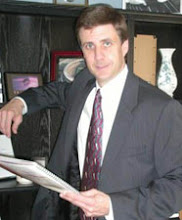
Tuesday, December 31, 2013

What's Driving You? (December 2013)


Last month, I asked “What Are You Driving?” which was targeted at the change and results for which you are responsible rather than the car that gets you to work and back.  Today, I’d ask a different but related question:  “What’s Driving You?”   Why do you get up and go to work in the morning? 

For all of us, this answer is different, but unless it involves something that you are passionate about, then it’s unlikely you are going to get the maximum result.  Money may provide some short term spark, but money alone is never a sufficient driver to lead to extraordinary results.   Over time, people grow accustomed to a certain level of income and the dollars that may have provided motivation at one point become an expectation.  

For most, the passion that drives comes from making a difference and feeling that our efforts have favorably impacted others or are appreciated.  As you think about your company, department, or even your own individual performance, ask yourself what is driving force?  What is causing you to wake up every morning and try to make a difference?  If you’ve lost sight of it, I’d encourage you to find a way to reconnect with the passion that may have fueled you at one point in time.  

I was once on a due diligence trip to a steel fabricator.  The business was a mess.  Operations were disorganized, bids didn’t seem to bear any relationship to costs, accounting was in poor shape – I could go on and on.  But the key finding was that the founder started as an artist working in steel.  At some point, he did some small fabrication work to pay the bills in order to support his artistic passion. Over time, the fabrication work had taken over and was consuming 100% of his time and had extinguished the fire that driven the entrepreneur and artist.  Instead of doing something that he was passionate about he found that owning a business was preventing him from doing what he loved.  And because he had no passion for the business, he wasn’t doing it very well; so it wasn’t even meeting the minimum standard that he had set for it – to pay his bills and provide a livelihood.  

He would have been better off being an employee in steel fabrication company . . . at least then he would have had a “9 to 5” job and could have used his weekends and evenings to pursue his artistic endeavors.  But as any business owner can attest, running a business is rarely a “9 to 5” endeavor. 

The purpose of a business is to support the dreams of the business owner, whatever they may be, not to quench them.   Think about this as you go about your day . . . what is the passion that fuels your performance?

As we wrap up another year, I’d like to thank all of you who read this monthly newsletter and especially those who take a moment to drop me a note and share your own thoughts about the topic of the month.   Wishing you a happy, healthy and productive 2014!   

If your business could benefit from fractional CFO services, I would welcome the chance to speak with you.  Please give me a call at (314) 863-6637 or send an email to     For more information, visit www.homza.com 

your
cash is flowing.  know where.
®    
Ken Homza   
Copyright @ 2013 Homza Consulting, Inc.

Monday, November 25, 2013

What Are You Driving? (November 2013)

Clearly, that’s a question that can be taken more than one way.  If the headline brought to mind the vehicle that gets you to work, around town, and on family vacations, that’s a reasonable way to think about the question.  But I actually meant it quite differently.  

Rather, what is the agenda that you are pushing forward every day?  What key difference are you trying to make in your job, be it at the executive level or elsewhere in the organization?   Do you start your day with a mission that you are trying to advance or are you just trying to complete tasks that, while necessary, serve no larger purpose?   Do you have a vision for your company or your department that provides a framework upon which you decide which items are worthy of your time and which are not?  

People (and therefore companies) who approach their roles with a vision of what they are trying to accomplish have a framework for making decisions.  That is not to say that the vision won’t change (in fact, it should be reviewed when facts come to light which would suggest it is not the best approach).  Nor is it to say you won’t have days just keeping the train on the tracks (we all have days like that despite our best efforts to be forward thinking).  

But having a vision allows you to not only set your own course but it provides a vehicle to communicate how others should approach their roles as well.  Not only do you have a vision and framework for approaching your work but that vision can be shared with those around you.  When those around you are making decisions, they can then apply that same framework and determine to what extent their actions are consistent with the longer term goals.  If they find that they are operating in a manner that they believe to be inconsistent with that vision, they can raise their hand and have a discussion about those actions and determine if there is something different they could be doing that is more consistent with the longer term direction.
Unless you are trying to drive something and invoke change, then your destiny will ultimately be controlled by people and circumstances around you rather than by yourself.   That is almost always less than ideal. 

If you find yourself or your company in this situation, then it is time for a change. Take the initiative and stake out a vision.  Putting that first stake in the ground doesn’t have to be a long, drawn out process but it does require some focused energy and thinking.  I recently sketched out a 2014 vision for the finance and accounting group of one of my clients.   After having solicited input from some key constituents, I spent an hour with the team and a blank sheet of paper on an easel.  By the end of that hour, we had thoughts around eight key initiatives that we could use to transform the department and positively impact the business over the coming year.  

Are we finished?   No.  We will have to decide upon specific actions and work over the next year in order to make significant progress.  But we have charted a course and are on our way.   

If your business could benefit from fractional CFO services, I would welcome the chance to speak with you.  Please give me a call at (314) 863-6637 or send an email to     For more information, visit www.homza.com 

your cash is flowing.  know where.®    
Ken Homza   
Copyright @ 2013 Homza Consulting, Inc.

Thursday, October 31, 2013

Doing Things "Righter" (October 2013)

Last month I wrote about Strategy vs. Execution and one of my readers wrote back and defined the terms as “Doing the Right Things”  (strategy) vs. “Doing Things Right” (execution).    I have never heard it expressed quite so simply before.  I almost always find that simpler is better as simple provides clarity.   Therefore, that saying has stuck with me and will for a very long time.    

While I enjoy working on strategic issues I find that most companies devote much of their time and energy to day-to-day execution.   Things that should work like a well-oiled machine often don’t.  And the cumulative effect of not “doing things right” shows up on the income statement.     

But what exactly does “right” mean when it comes to a particular work process or outcome?  In many instances, right is not simply the opposite of wrong but rather is somewhere on the continuum of just OK to truly excellent or exceptional.     

There are times when “good enough” actually is all that is needed and going beyond the minimum standard doesn’t add any value.  But in most instances, performance is measured on a continuum of outcomes and constantly striving to do better is critical.   In these instances, it is not just about doing things right, it is about doing things “righter” than you did them yesterday.     

It is important to always seek to improve business processes.  While a process that was put in place years ago may be working, that doesn’t mean it is at optimal efficiency.   Customers change, products and services change, new competitors spring up while old ones fade away, and technology has dramatically changed the way we all live and work.   That means that business processes need to change as well.   

This isn’t limited to your core manufacturing or service processes (although those are critical) but also includes your HR practices, accounting procedures, customer service interactions, and everything else you do in your organization.   Think about it, even janitorial staffs have had to change their processes to deal with recycling as opposed to throwing everything in the trash. 

In a world where change is the ever present constant, it’s more important than ever to ask if your business processes are not just keeping pace with the times but helping your company outperform its competitors. 

Are you doing things “righter” today than you did them yesterday?  

If your business could benefit from fractional CFO services, I would welcome the chance to speak with you.  Please give me a call at (314) 863-6637 or send an email to    For more information, visit www.homza.com 

your cash is flowing.  know where.®     
Ken Homza   
Copyright @ 2013 Homza Consulting, Inc.

Sunday, September 29, 2013

Strategy vs. Execution (September 2013)

The other evening I was at a dinner party and the subject of strategy vs. execution came up.   I’ve played lead roles on both strategy and implementation teams so I have experience in both areas (still it was a Saturday evening and I tried to steer the conversation back to favorite vacation spots).  

In my opinion, however, the question of asking whether strategy or implementation is more important is analogous to asking what’s more important in a car, the engine or the transmission.    Neither is more important than the other because unless you have both, you’re not going anywhere.   The same is true of strategy and execution.   You can have a brilliant strategy but if you don’t execute, it’s meaningless.  Similarly, you can be great at execution but unless you have a strategy that is in tune with the marketplace and your competitive position you will find yourself perfectly executing a strategy that doesn’t move the business forward in any meaningful way.  

Early in my career, I was part of a company that was well known for strategy development but fell short on implementation.   The company never achieved its potential and lost significant momentum and market share as a result.  It had leading products and great ideas about how to position them in the marketplace as well as future needs but was always a step behind when it came to implementation.   In short, something was “lost in translation”.  

On the other end of the spectrum, I have worked with teams who are excellent at implementation but never take a moment to step back and ask if they are doing the right things.   They would benefit tremendously from taking the time to step away from day to day implementation and think strategically about how to grow their business.   

A business is a system and the only way to maximize the efficiency of that system is to make sure that the system is operating effectively as a whole.   Over emphasis of one component to the detriment of others does not accomplish this goal.  Rather, every area of the business needs attention.   If a business does not regularly think about its long term strategic vision and where it is trying to go over the next three to five years relative to its external operating environment then it is leaving its future to chance and is likely to fall short of its competitors. 

On the other hand, if the business has a brilliant strategy but cannot effectively execute on that strategy by doing literally thousands of things well every single day, then the vision is unlikely to turn into reality.  Rather the company will be finding itself revisiting and updating the strategy but never making progress toward its goals.  

Obviously, any discussion about strategy could take up far more space than I devote to it here and countless books have been written on the subject.   And the same is true of implementation and operations.    But excellence in both strategy and execution is necessary to achieve optimal performance and stand out from the crowd regardless of industry. 

Think about your company.   Are you both thinking strategically as well as striving for excellence in the implementation of that strategy?

If your business could benefit from fractional CFO services, I would welcome the chance to speak with you.  Please give me a call at (314) 863-6637 or send an email to   For more information, visit www.homza.com 
your cash is flowing.  know where.®    
Ken Homza   
Copyright @ 2013 Homza Consulting, Inc.